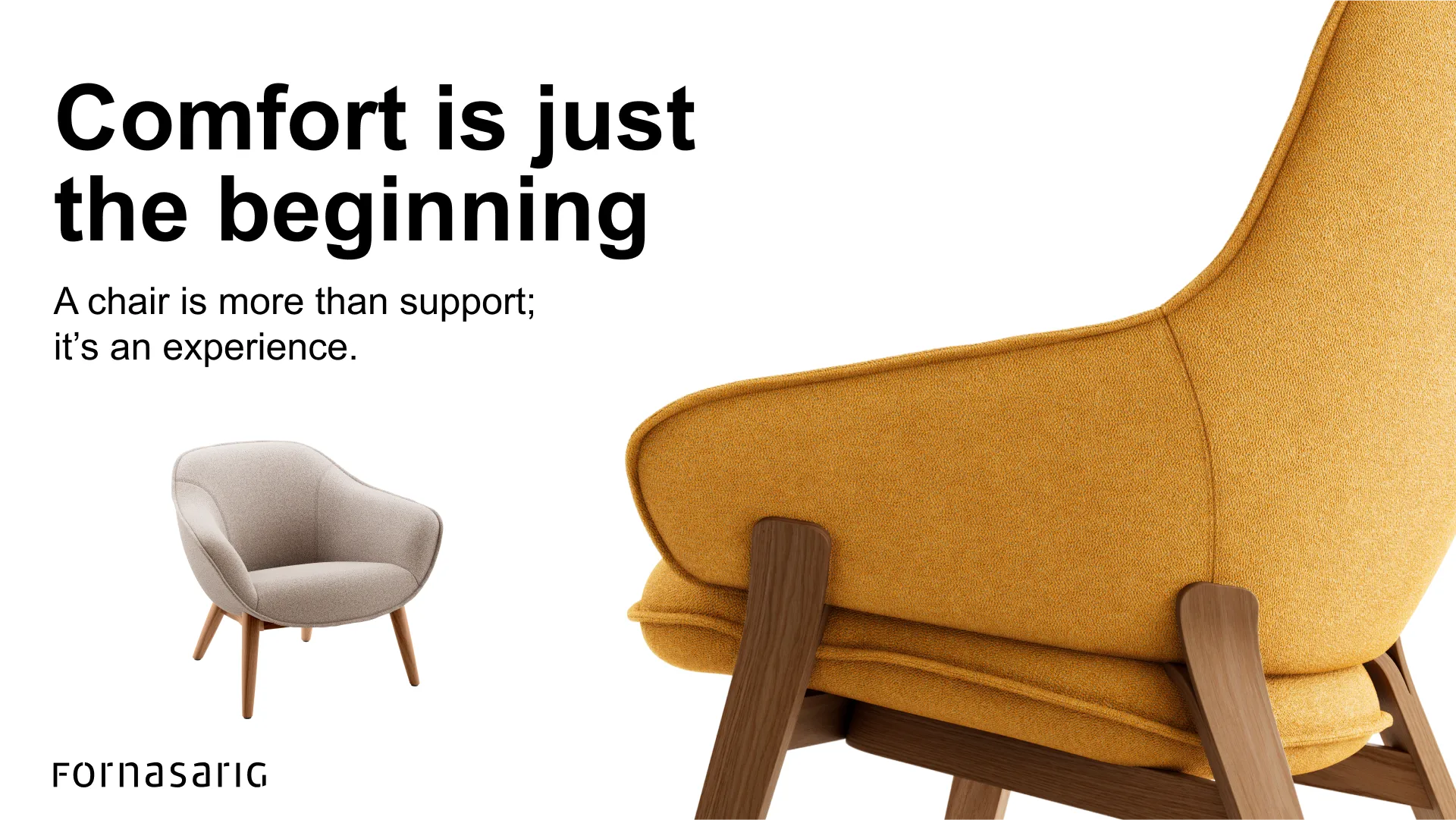
From posture to experience
For decades, the conversation around seating was dominated by posture. The assumption was simple: if a chair supported the spine, it was ergonomic. But design has evolved, and today we know that true ergonomics goes far beyond physical alignment.
Ergonomic design chairs shape not only how people sit, but how they think, feel, and perform in a space. A chair that distributes weight evenly and adapts to natural movement reduces stress, increases focus, and creates a sense of ease that lasts for hours.
Especially in contract environments (conference rooms, restaurants, universities, coworking spaces), this change has a huge impact. Comfort is no longer a luxury; it is a prerequisite for productivity and wellbeing.
When chairs are designed with both the body and mind in mind, as Fronasarig has been doing since 1878, these fundamental pieces of furniture become an integral part of the architecture of the experience itself.
Ergonomics is not an accessory, but the hidden structure that supports creativity, concentration, and social interaction.
The three dimensions of comfort
Comfort is multifaceted, and modern ergonomic chairs embrace its complexity. They respond not only to posture, but also to perception. Three dimensions define how a chair interacts with people: visual, tactile, and acoustic comfort.
Visual comfort
Visual comfort begins with proportion and line. A chair that feels harmonious to the eye immediately relaxes the mind. In lecture halls or dining rooms, this translates into a sense of order and calm. Visual comfort reduces cognitive stress and helps people stay focused.
Tactile comfort
Tactile comfort is the language of materials. Fabrics, finishes, and surface treatments define how the body receives contact. When textures feel natural and supportive, they create trust between user and object. Tactile comfort transforms sitting into an embodied experience.
Acoustic comfort
Acoustic comfort may be the least sought-after quality, but it is just as essential. Chairs can absorb, reflect, or transmit sound depending on their design and material. In large spaces, such as auditoriums, coworking hubs, or restaurants, controlling sound through furniture improves concentration and conviviality. In fact, acoustic comfort shapes the way people interact in particularly crowded and shared environments.
Therefore, these dimensions demonstrate, as Fornasarig also argues, that ergonomic seating is not just a matter of mechanics. It is an orchestration of the senses that transforms functional support into emotional resonance.
The Fornasarig approach to ergonomic design
Fornasarig has been designing and producing chairs since 1878, and the company’s approach to ergonomics reflects this long tradition of craftsmanship combined with innovation. Each collection is developed with the awareness that a chair is not just an object, but part of an environment where people live, work, and connect.
Human-centered design
The starting point is always the person. Chairs are studied to adapt to diverse postures and body types, ensuring inclusivity without sacrificing elegance. Human-centered design makes every seat accessible and comfortable for all users.
Material intelligence
The selection of wood, metal, fabrics, and polymers follows strict standards of durability, safety, and sustainability. Materials are chosen not only for their aesthetic qualities but for how they interact with the senses. Material intelligence transforms technical choices into human experiences.
Flexibility and adaptability
In contract environments, spaces must constantly evolve. For this reason, Fornasarig chairs are designed to be stackable, connectable, and easy to move, combining functional intelligence with architectural elegance. In fact, the flexibility of Fornasarig solutions ensures that designer chairs remain relevant in dynamic contexts.
Ultimately, ergonomics for Fornasarig is not an isolated feature. It is the DNA of every collection, a synthesis of comfort, functionality, and timeless desig
Case histories and global applications
The value of ergonomic design chairs becomes tangible only when we look at the spaces where they are used. A chair is not simply an object to sit on; it is part of the architecture of experience. In hospitality, for instance, this becomes immediately evident. The moment a guest enters a dining room, the choice of seating contributes as much to the atmosphere as the lighting or the décor. In fact, a well-designed chair can extend the pleasure of dining, creating that subtle ease which encourages people to stay longer, to enjoy conversation, and to
This logic applies differently in cultural and educational environments. Here the challenge is not conviviality, but concentration. Hours of lectures, performances, or study require furniture that does not distract but supports. At the Urana Center in Australia, Fornasarig chairs were selected because they help sustain focus through long sessions. In other words, comfort here is not indulgence but the invisible foundation that makes learning and exchange possible.
The picture changes again in workplaces and conference halls. These are spaces defined by constant transformation: one day a formal meeting, the next a collaborative workshop, then a large-scale event. Furniture must adapt at the same speed. Stackable, linkable, durable chairs answer this demand, but elegance remains essential. Without beauty, functionality alone cannot inspire. By contrast, when ergonomics meets design, flexibility becomes an ally of productivity and connection.
Seen together, from Europe to Australia, from hotels to universities, these projects demonstrate a single truth: ergonomic design chairs elevate spaces because they reconcile human needs with architectural intent.
Why professionals choose Fornasarig
Choosing seating for contract spaces is never just about design: it is about trust, continuity, and shared values. Many architects, designers, and hospitality professionals select Fornasarig because they know every collection brings together heritage, innovation, and sustainability.
- Heritage: since 1878, four generations have translated craftsmanship into contemporary design.
- Innovation: patented systems, tested durability, and designs created in collaboration with international studios.
- Sustainability: FSC® certified wood, recyclable materials, and a production process that reduces waste.
Fornasarig is not only a manufacturer of chairs: it is a partner for those who design spaces where people meet, learn, and live. This is why professionals across the world continue to choose Fornasarig for their most demanding projects.